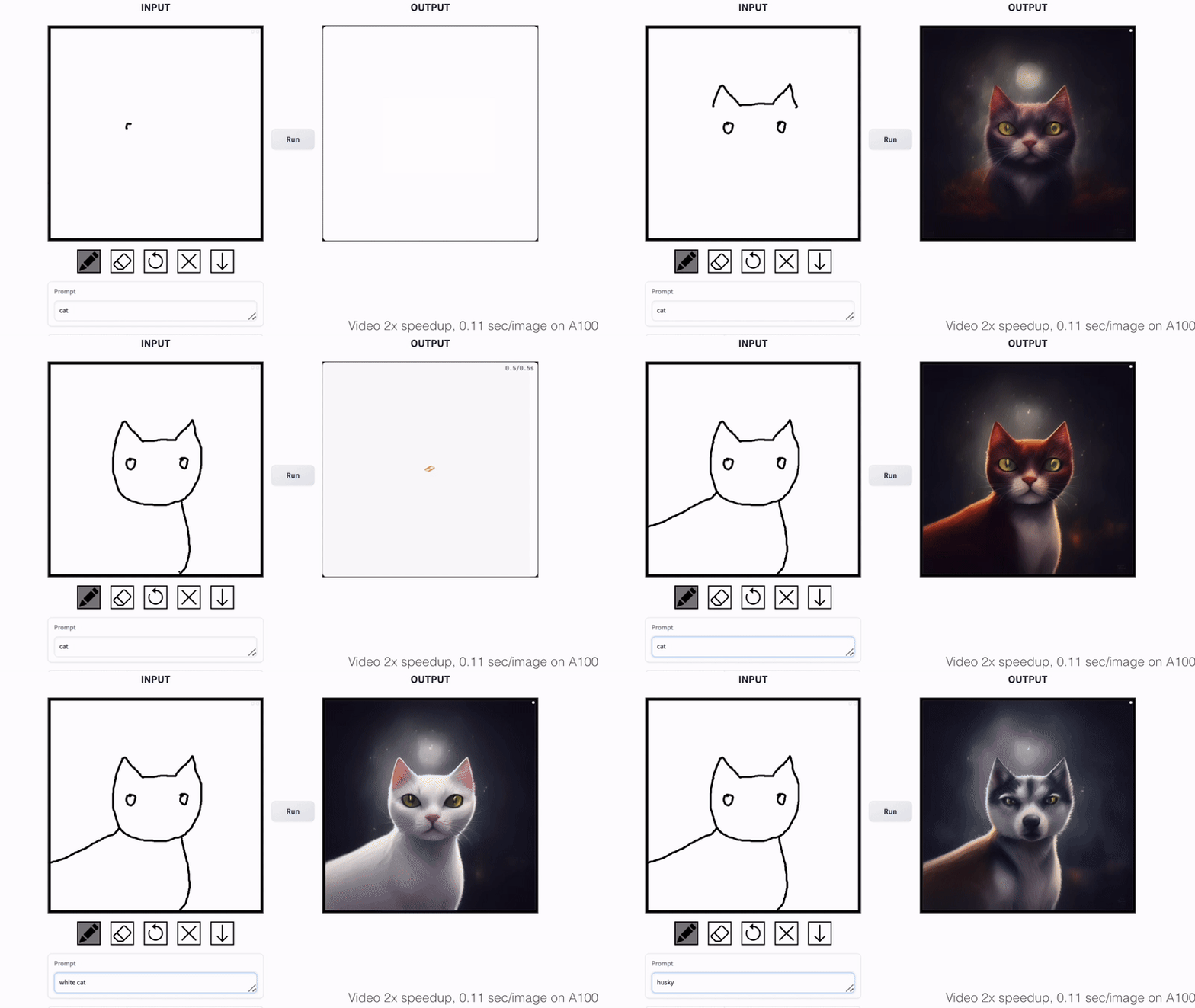
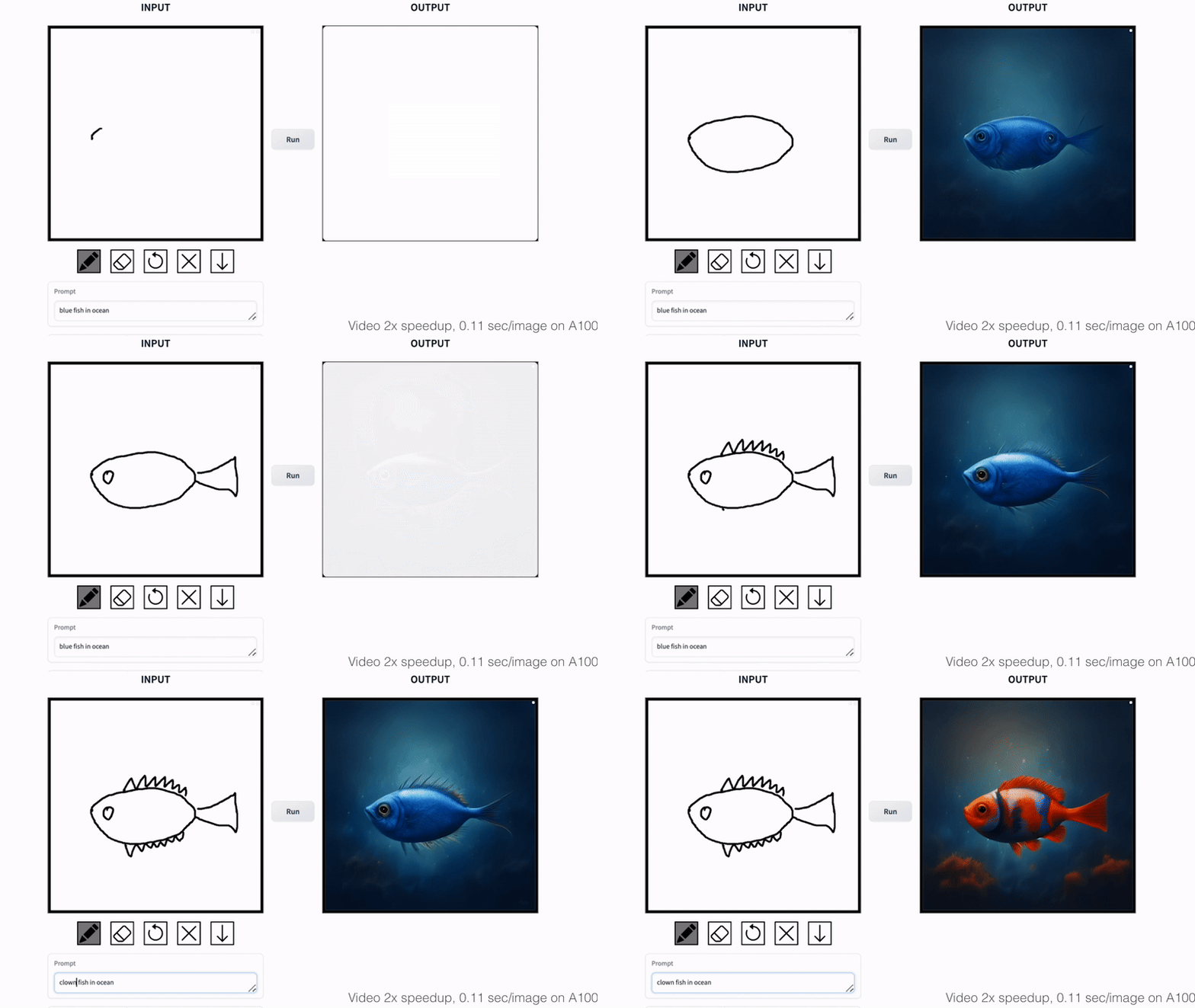
We propose a general method for adapting a single-step diffusion model, such as SD-Turbo, to new tasks and domains through adversarial learning. This enables us to leverage the internal knowledge of pre-trained diffusion models while achieving efficient inference (e.g., for 512x512 images, 0.29 seconds on A6000 and 0.11 seconds on A100).
Our one-step conditional models CycleGAN-Turbo and pix2pix-turbo can perform various image-to-image translation tasks for both unpaired and paired settings. CycleGAN-Turbo outperforms existing GAN-based and diffusion-based methods, while pix2pix-turbo is on par with recent works such as ControlNet for Sketch2Photo and Edge2Image, but with one-step inference.
By varying the input noise map, our method can generate diverse outputs from the same input conditioning.
The output style can be controlled by changing the text prompt.
Unpaired Translation with CycleGAN-Turbo
Day to Night
Night to Day
Clear to Rainy
Rainy to Clear
Method
Our Generator Architecture:
We tightly integrate three separate modules in the original latent diffusion models into a single end-to-end network with small trainable weights. This architecture allows us to translate the input image x to the output y, while retaining the input scene structure. We use LoRA adapters in each module, introduce skip connections and Zero-Convs between input and output, and retrain the first layer of the U-Net. Blue boxes indicate trainable layers. Semi-transparent layers are frozen. The same generator can be used for various GAN objectives.
Getting Started
Environment Setup
We provide a conda env file that contains all the required dependencies.
conda env create -f environment.yaml
Following this, you can activate the conda environment with the command below.