These files were quantised using hardware kindly provided by Massed Compute.
About AWQ
AWQ is an efficient, accurate and blazing-fast low-bit weight quantization method, currently supporting 4-bit quantization. Compared to GPTQ, it offers faster Transformers-based inference with equivalent or better quality compared to the most commonly used GPTQ settings.
AWQ models are currently supported on Linux and Windows, with NVidia GPUs only. macOS users: please use GGUF models instead.
Below is an instruction that describes a task. Write a response that appropriately completes the request.

### Instruction:
{prompt}

### Response:
Licensing
The creator of the source model has listed its license as cc-by-nc-4.0, and this quantization has therefore used that same license.
As this model is based on Llama 2, it is also subject to the Meta Llama 2 license terms, and the license files for that are additionally included. It should therefore be considered as being claimed to be licensed under both licenses. I contacted Hugging Face for clarification on dual licensing but they do not yet have an official position. Should this change, or should Meta provide any feedback on this situation, I will update this section accordingly.
In the meantime, any questions regarding licensing, and in particular how these two licenses might interact, should be directed to the original model repository: Raven's Nethena 20B Glued.
Provided files, and AWQ parameters
I currently release 128g GEMM models only. The addition of group_size 32 models, and GEMV kernel models, is being actively considered.
Please ensure you are using vLLM version 0.2 or later.
When using vLLM as a server, pass the --quantization awq parameter.
For example:
python3 -m vllm.entrypoints.api_server --model TheBloke/Nethena-20B-Glued-AWQ --quantization awq --dtype auto
When using vLLM from Python code, again set quantization=awq.
For example:
python
1from vllm import LLM, SamplingParams
23prompts =[4"Tell me about AI",5"Write a story about llamas",6"What is 291 - 150?",7"How much wood would a woodchuck chuck if a woodchuck could chuck wood?",8]9prompt_template=f'''Below is an instruction that describes a task. Write a response that appropriately completes the request.
1011### Instruction:
12{prompt}1314### Response:
15'''1617prompts =[prompt_template.format(prompt=prompt)for prompt in prompts]1819sampling_params = SamplingParams(temperature=0.8, top_p=0.95)2021llm = LLM(model="TheBloke/Nethena-20B-Glued-AWQ", quantization="awq", dtype="auto")2223outputs = llm.generate(prompts, sampling_params)2425# Print the outputs.26for output in outputs:27 prompt = output.prompt
28 generated_text = output.outputs[0].text
29print(f"Prompt: {prompt!r}, Generated text: {generated_text!r}")
Multi-user inference server: Hugging Face Text Generation Inference (TGI)
Use TGI version 1.1.0 or later. The official Docker container is: ghcr.io/huggingface/text-generation-inference:1.1.0
Example Python code for interfacing with TGI (requires huggingface-hub 0.17.0 or later):
pip3 install huggingface-hub
python
1from huggingface_hub import InferenceClient
23endpoint_url ="https://your-endpoint-url-here"45prompt ="Tell me about AI"6prompt_template=f'''Below is an instruction that describes a task. Write a response that appropriately completes the request.
78### Instruction:
9{prompt}1011### Response:
12'''1314client = InferenceClient(endpoint_url)15response = client.text_generation(prompt,16 max_new_tokens=128,17 do_sample=True,18 temperature=0.7,19 top_p=0.95,20 top_k=40,21 repetition_penalty=1.1)2223print(f"Model output: ", response)
Transformers example code (requires Transformers 4.35.0 and later)
python
1from transformers import AutoModelForCausalLM, AutoTokenizer, TextStreamer
23model_name_or_path ="TheBloke/Nethena-20B-Glued-AWQ"45tokenizer = AutoTokenizer.from_pretrained(model_name_or_path)6model = AutoModelForCausalLM.from_pretrained(7 model_name_or_path,8 low_cpu_mem_usage=True,9 device_map="cuda:0"10)1112# Using the text streamer to stream output one token at a time13streamer = TextStreamer(tokenizer, skip_prompt=True, skip_special_tokens=True)1415prompt ="Tell me about AI"16prompt_template=f'''Below is an instruction that describes a task. Write a response that appropriately completes the request.
1718### Instruction:
19{prompt}2021### Response:
22'''2324# Convert prompt to tokens25tokens = tokenizer(26 prompt_template,27 return_tensors='pt'28).input_ids.cuda()2930generation_params ={31"do_sample":True,32"temperature":0.7,33"top_p":0.95,34"top_k":40,35"max_new_tokens":512,36"repetition_penalty":1.137}3839# Generate streamed output, visible one token at a time40generation_output = model.generate(41 tokens,42 streamer=streamer,43**generation_params
44)4546# Generation without a streamer, which will include the prompt in the output47generation_output = model.generate(48 tokens,49**generation_params
50)5152# Get the tokens from the output, decode them, print them53token_output = generation_output[0]54text_output = tokenizer.decode(token_output)55print("model.generate output: ", text_output)5657# Inference is also possible via Transformers' pipeline58from transformers import pipeline
5960pipe = pipeline(61"text-generation",62 model=model,63 tokenizer=tokenizer,64**generation_params
65)6667pipe_output = pipe(prompt_template)[0]['generated_text']68print("pipeline output: ", pipe_output)69
I've had a lot of people ask if they can contribute. I enjoy providing models and helping people, and would love to be able to spend even more time doing it, as well as expanding into new projects like fine tuning/training.
If you're able and willing to contribute it will be most gratefully received and will help me to keep providing more models, and to start work on new AI projects.
Donaters will get priority support on any and all AI/LLM/model questions and requests, access to a private Discord room, plus other benefits.
Patreon special mentions: Michael Levine, 阿明, Trailburnt, Nikolai Manek, John Detwiler, Randy H, Will Dee, Sebastain Graf, NimbleBox.ai, Eugene Pentland, Emad Mostaque, Ai Maven, Jim Angel, Jeff Scroggin, Michael Davis, Manuel Alberto Morcote, Stephen Murray, Robert, Justin Joy, Luke @flexchar, Brandon Frisco, Elijah Stavena, S_X, Dan Guido, Undi ., Komninos Chatzipapas, Shadi, theTransient, Lone Striker, Raven Klaugh, jjj, Cap'n Zoog, Michel-Marie MAUDET (LINAGORA), Matthew Berman, David, Fen Risland, Omer Bin Jawed, Luke Pendergrass, Kalila, OG, Erik Bjäreholt, Rooh Singh, Joseph William Delisle, Dan Lewis, TL, John Villwock, AzureBlack, Brad, Pedro Madruga, Caitlyn Gatomon, K, jinyuan sun, Mano Prime, Alex, Jeffrey Morgan, Alicia Loh, Illia Dulskyi, Chadd, transmissions 11, fincy, Rainer Wilmers, ReadyPlayerEmma, knownsqashed, Mandus, biorpg, Deo Leter, Brandon Phillips, SuperWojo, Sean Connelly, Iucharbius, Jack West, Harry Royden McLaughlin, Nicholas, terasurfer, Vitor Caleffi, Duane Dunston, Johann-Peter Hartmann, David Ziegler, Olakabola, Ken Nordquist, Trenton Dambrowitz, Tom X Nguyen, Vadim, Ajan Kanaga, Leonard Tan, Clay Pascal, Alexandros Triantafyllidis, JM33133, Xule, vamX, ya boyyy, subjectnull, Talal Aujan, Alps Aficionado, wassieverse, Ari Malik, James Bentley, Woland, Spencer Kim, Michael Dempsey, Fred von Graf, Elle, zynix, William Richards, Stanislav Ovsiannikov, Edmond Seymore, Jonathan Leane, Martin Kemka, usrbinkat, Enrico Ros
Thank you to all my generous patrons and donaters!
And thank you again to a16z for their generous grant.
athirdpath/Nethena-20b-Glue-LORA is a 128 rank LORA for RP, trained on a private dataset. It is unalligned and NSFW-oriented.
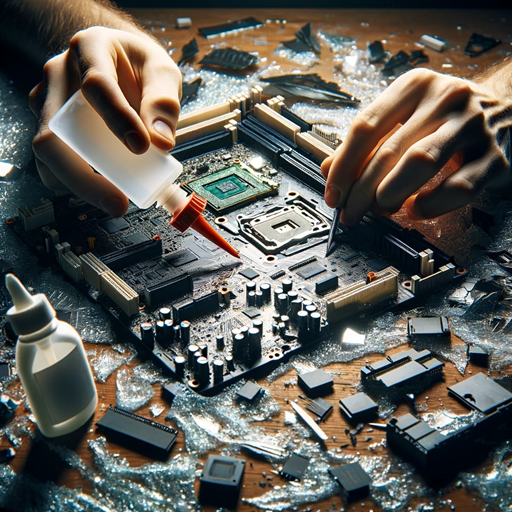
This is a test, exploring the effects of "gluing" the components of the 20b model together to reduce the iconic word replacement errors, increase lucidity, and improve recall.
image/png
The private ~500k token dataset used to train the LORA was Alpaca formatted and focused on 4 primary categories:
- Medical texts (on psychology, reproductive organs, anatomy, and pregnancy). These are formatted so the model, in character as a doctor or therapist, answers a patient's question in short to medium form.
- Excerpts from short stories and novellas (erotic and romantic) centered around both realistic and fantastic situations, covering several fetishes as well. These are sliced into ~2048 token chunks, and these long-form responses are all tied to the command “Enter narrator mode.” in the instructions.
- A selection from PIPPA, using a wide keyword search for tokens associated with low quality human or AI data to remove those responses, then a positive search was done for words and phrases associated with a higher reading level. These are converted to Alpaca with “Enter RP mode.” in all the instruction fields.
- ~18k tokens of GPT-4 generated data on role-playing from various characters’ perspectives, focusing on different situations and emotions. Includes many multi-turn conversations.
So far it is passing subjective testing with flying colors, objective numbers coming soon.