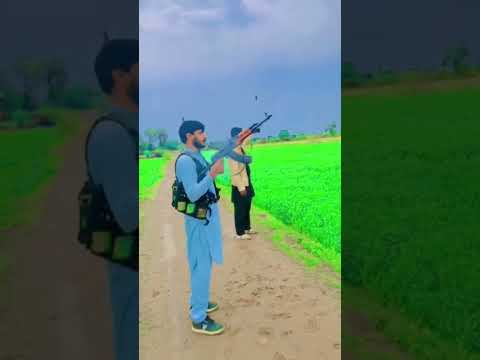
A 7-class weapon detector trained on 104,697 images using a 4-phase progressive fine-tuning pipeline. Final mAP@50 of 0.8913 with TTA. TensorRT FP16 export runs at ~5ms/image on H100.
This README documents exactly what was done, why each decision was made, what the numbers actually mean, and how to reproduce everything from scratch.
What this is
A fine-tuned YOLO26x checkpoint for detecting weapons and related threat objects in images and video. The seven classes are: Blunt Weapon, Explosive, Fire Smoke, Firearm, Melee_Weapon, Person, Tool.
Person is intentionally included as a context class, not a standalone person detector. Its lower mAP@50 (0.747) is expected — person annotations in the dataset are sparse and only label people in weapon-adjacent scenes. Don't use this model as a people counter.
The training pipeline is the main contribution here. Most public YOLO uploads are a single training run with default hyperparameters. This one uses a 4-phase curriculum that addresses two real problems: catastrophic gradient updates from mosaic augmentation on background-heavy data early in training, and the resolution gap between pretraining (640px) and deployment (1024px). Details in the Training section.
The high numbers on Explosive and Melee_Weapon are partly a dataset artifact — those classes have distinctive visual signatures (grenades, blades) relative to their backgrounds. Firearm at 0.932 is more meaningful because firearms appear in more varied contexts with more partial occlusions.
Phase progression
Phase
Epochs
imgsz
Frozen layers
mAP@50
1 — Stabilization
10
800
10
0.865
2 — Full backbone
15
800
0
0.881
3 — High-res refinement
10
1024
0
0.891
4 — TTA validation
—
1024
—
0.8913
The +1.6% jump from Phase 2→3 comes entirely from the resolution increase. Small objects (knives at distance, grenade pins) that were borderline at 800px become unambiguous at 1024px. This is consistent with what you'd expect from the receptive field math.
1from ultralytics import YOLO
23model = YOLO("model/best.pt")45# Single image6results = model("image.jpg", conf=0.35, iou=0.45, imgsz=1024)7results[0].show()89# Video — stream=True is important, loads one frame at a time10for r in model("video.mp4", conf=0.35, iou=0.45, imgsz=1024, stream=True):11print(r.boxes)
TensorRT (fastest, GPU only)
The included .engine was compiled on H100 with TensorRT 10.15.1. It will not load on a different GPU architecture. Re-export it:
The 8.6% background images are intentional and important. They teach the model to suppress false positives in clean scenes. Removing them consistently hurts precision on real-world footage where most frames contain no weapons.
Why 4 phases
Fine-tuning YOLO26x from scratch (i.e., with a single model.train() call at 1024px) produces an unstable run. Two things go wrong:
Mosaic + background images + AMP = NaN. Mosaic augmentation at 1024px assembles 4 images into one. When a background tile (no annotations) gets combined with weapon tiles, the AMP GradScaler occasionally sees a NaN gradient and skips the update. At 8.6% background frequency this happens enough in the first few epochs to destabilize the optimizer. The fix is to start with freeze=10 (backbone frozen), smaller LR, and no mixup or copy_paste until the head is stable.
Resolution gap. The base YOLO26x checkpoint was pretrained at 640px. Jumping directly to 1024px triples the spatial resolution. The attention patterns and anchor statistics are mismatched. Training at 800px first lets the model re-learn the feature scales before the final resolution bump.
Phase details
Phase 1 — Stabilization (10 epochs, 800px)
Freeze the first 10 backbone layers. Only the neck and head train. AdamW with lr0=8e-5, no mixup, no copy_paste. Light augmentation (degrees=10, scale=0.5, erasing=0.3). This gets the head calibrated without corrupting the pretrained backbone features. Loss is stable from epoch 1.
Phase 2 — Full backbone (15 epochs, 800px)
Unfreeze everything. Drop LR to 5e-5. Add mixup=0.15 and copy_paste=0.3. These two augmentations are high-value for weapon detection specifically: mixup teaches the model to handle overlapping weapon/person scenes, copy_paste synthesizes uncommon weapon-in-new-context combinations that the dataset underrepresents. degrees=12, scale=0.6 — heavier geometric augmentation now that the backbone is stable enough to handle it.
Phase 3 — High-res refinement (10 epochs, 1024px)
Load Phase 2 best.pt. Drop batch from 32→12 to fit H100 memory at 1024px. lr0=2e-5 — very conservative, we're making fine adjustments to existing good features, not relearning. Reduce mosaic to 0.8 (full mosaic at 1024px is expensive and we're in a refinement phase). This phase's job is purely recall improvement on small objects. It does exactly that: recall goes from 0.808 → 0.819.
Phase 4 — Export
TTA validation with augment=True, conf=0.001, iou=0.6. TTA adds ~3× inference cost but gives a more honest mAP estimate than single-pass. The TRT export took 447s on H100 — this is normal for a workspace=6GB, half=True, imgsz=1024 build.
Hyperparameter table
Phase 1
Phase 2
Phase 3
epochs
10
15
10
imgsz
800
800
1024
batch
32
32
12
optimizer
AdamW
AdamW
AdamW
lr0
8e-5
5e-5
2e-5
lrf
0.01
0.01
0.005
freeze
10
0
0
mosaic
1.0
1.0
0.8
mixup
0.0
0.15
0.1
copy_paste
0.0
0.3
0.2
degrees
10
12
8
scale
0.5
0.6
0.5
erasing
0.3
0.4
0.2
label_smoothing
0.05
0.05
0.05
patience
10
15
10
cos_lr
✓
✓
✓
amp
✓
✓
✓
Reproducing
bash
1# Phase 1 through 3 + TRT export in one shot2python train.py \3 --data dataset.yaml \4 --base-weights yolo26x.pt \5 --work-dir runs/weapon_yolo26x
67# Resume from a checkpoint8python train.py \9 --data dataset.yaml \10 --resume-from runs/weapon_yolo26x/phase2/weights/best.pt \11 --start-phase 31213# Export only (if you already have best.pt)14python train.py \15 --export-only \16 --weights model/best.pt \17 --data dataset.yaml
The full pipeline takes ~6 hours on H100 (10+15+10 epochs at the respective resolutions, plus the 447s TRT build).
Model card
Architecture
YOLO26x
Parameters (train)
58.8M
Parameters (fused)
55.6M
GFLOPs (train)
208.6
GFLOPs (fused)
193.4
Framework
PyTorch / Ultralytics ≥ 8.3
TRT engine
TensorRT 10.15.1 FP16
Training GPU
NVIDIA H100 80GB
Python
3.12.12
PyTorch
2.9.0+cu126
CUDA
12.6
Limitations
To be honest about what this model doesn't do well.
Person class is weak. mAP@50 of 0.747 vs 0.93+ for weapon classes. The dataset labels people only in weapon-adjacent contexts and the annotations are incomplete. If you need robust person detection, use a dedicated model (e.g., YOLOv8n pretrained on COCO) in parallel.
Low-light degrades recall meaningfully. The dataset skews toward daylight/indoor security footage. Dark scenes drop recall on Melee_Weapon and Blunt_Weapon noticeably. No quantified benchmarks for this yet.
Extreme occlusion is hard. A half-visible handgun behind a jacket will likely be missed. The model has no depth or shape-completion capability — it's purely 2D texture-and-shape matching.
The .engine file is H100-specific. TensorRT engines are not portable across GPU architectures. Re-export from best.pt for any other GPU. The re-export takes ~8 minutes on a T4, ~15 minutes on an older V100.
Not a safety system. Detection accuracy in the low-to-mid 90s means false negatives at non-trivial rates. Do not deploy this as a sole gate in any safety-critical pipeline without human review and proper evaluation on your specific deployment domain.
Threshold guidance
Default thresholds (conf=0.35, iou=0.45) are a balanced starting point. Adjust based on your use case:
Security screening / high recall needed: lower conf to 0.15–0.25. Expect more false positives. The Best F1 is actually at conf=0.10, so the model's natural operating point is lower than the default.
Alert systems / low false-positive budget: raise conf to 0.5–0.6. You will miss more real detections but the ones you get will be high-confidence.
Overlapping objects / dense scenes: lower iou to 0.35. Higher iou (0.6+) is more aggressive at suppressing boxes and can merge nearby distinct weapons.
Development environment
The flake.nix provides two shells:
bash
1# Full dev shell (torch, ultralytics, gradio via pip venv)2nix develop
34# Download-only shell (just huggingface-hub)5nix develop .#download
Python 3.12 is pinned — 3.13 is excluded because NumPy 1.26.x dropped Py3.13 support and ultralytics 8.3 hasn't been verified against NumPy 2.x.
The pip venv is intentional. Torch and TensorRT are too GPU-specific and too large to package cleanly in nixpkgs. Nix provides the Python interpreter and system libs (libstdc++, libGL, glib); pip owns the ML stack inside .venv/.
Tests
pytest tests/ -v
The smoke tests don't require a GPU or the model weights. They cover: config loading and validation, CLI argument parsing, and the output-path collision-avoidance logic in _common.py. These are the classes of bugs most likely to surface silently in a long inference run.
Citation
bibtex
1@misc{haiderkhan6410_yolo26x_2026,
2  author       = {Haider Khan},
3  title        = {Weapon YOLO26x: Multi-Phase Real-Time Weapon Detection},
4  year         = {2026},
5  publisher    = {Hugging Face},
6  url          = {https://huggingface.co/HaiderKhan6410/weapon-yolo26x},
7  note         = {Available on Hugging Face and GitHub. Accessed: 2026-03-26}
8}
Free to use, modify, and distribute, including commercially, provided the use-based
restrictions in Attachment A of the license are respected. Key restrictions: no use for
illegal purposes, no generating or disseminating disinformation, no use in fully automated
decision systems that affect legal rights without human oversight.
Any deployment in a real-world security context should be done in compliance with local
laws, with appropriate human oversight, and with proper evaluation on the target domain
before going live.