pip install and bundled
with the package as a single binary. Model and image files are referenced
by filesystem path through a built-in file browser — nothing is uploaded
or copied to temp storage.pip install gguf-diffusion1$env:CMAKE_ARGS="-DSD_CUDA=ON"
2pip install gguf_diffusion-x.x.x.tar.gz1$env:CMAKE_ARGS="-DSD_HIPBLAS=ON"
2pip install gguf_diffusion-x.x.x.tar.gzpip install gguf_diffusion-x.x.x.tar.gzgguf-diffusion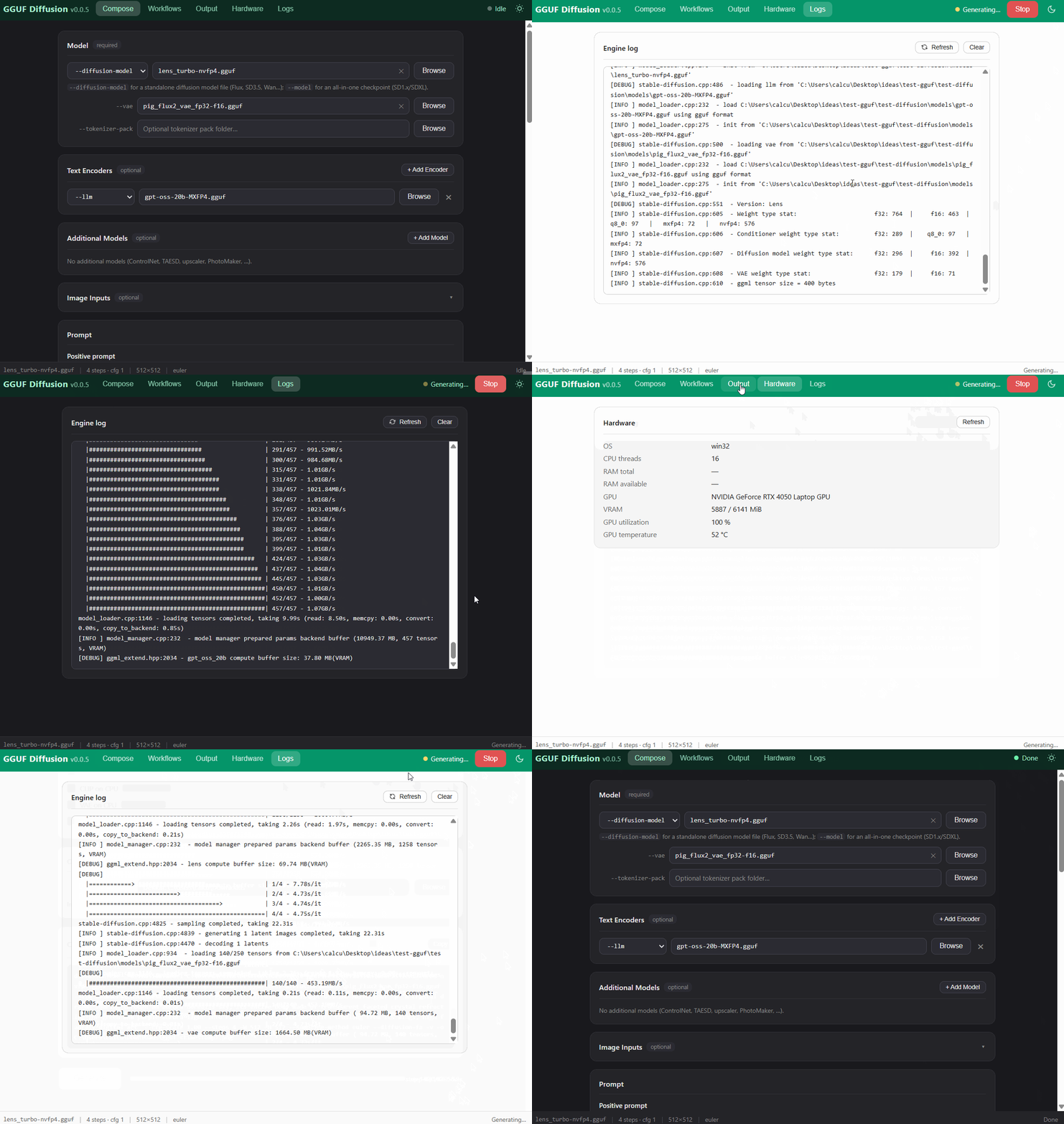
--model / --diffusion-model, VAE,
external text encoders (--clip_l, --t5xxl, --llm, …), additional
models (ControlNet, TAESD, upscaler, PhotoMaker, …), tokenizer packsgguf-diffusion engine -- --diffusion-model model.gguf --clip_l clip_l.gguf --clip_g clip_g.gguf --t5xxl t5xxl.gguf --vae vae.gguf -H 512 -W 512 -p 'a lovely cat holding a sign says GGUF' --steps 8 --cfg-scale 1 --sampling-method euler -v --clip-on-cpu -o out.pngpip install compiles the diffusion.cpp engine (static libdiffusion +
static ggml linked into one CLI executable) via scikit-build-core and
installs it into the package's bin/ directory.gguf-diffusion starts a stdlib HTTP server (default port 8643) serving
the static GUI and a small JSON API, and opens the browser./api/browse) so the
GUI gets real filesystem paths — no drag & drop uploads of multi-GB models.gguf-connectorggc fu