The GGML format has now been superseded by GGUF. As of August 21st 2023, llama.cpp no longer supports GGML models. Third party clients and libraries are expected to still support it for a time, but many may also drop support.
Please use the GGUF models instead.
About GGML
GGML files are for CPU + GPU inference using llama.cpp and libraries and UIs which support this format, such as:
text-generation-webui, the most popular web UI. Supports NVidia CUDA GPU acceleration.
KoboldCpp, a powerful GGML web UI with GPU acceleration on all platforms (CUDA and OpenCL). Especially good for story telling.
LM Studio, a fully featured local GUI with GPU acceleration on both Windows (NVidia and AMD), and macOS.
LoLLMS Web UI, a great web UI with CUDA GPU acceleration via the c_transformers backend.
ctransformers, a Python library with GPU accel, LangChain support, and OpenAI-compatible AI server.
llama-cpp-python, a Python library with GPU accel, LangChain support, and OpenAI-compatible API server.
As of August 23rd 2023 they are still compatible with all UIs, libraries and utilities which use GGML. This may change in the future.
Explanation of the new k-quant methods
Click to see details
The new methods available are:
GGML_TYPE_Q2_K - "type-1" 2-bit quantization in super-blocks containing 16 blocks, each block having 16 weight. Block scales and mins are quantized with 4 bits. This ends up effectively using 2.5625 bits per weight (bpw)
GGML_TYPE_Q3_K - "type-0" 3-bit quantization in super-blocks containing 16 blocks, each block having 16 weights. Scales are quantized with 6 bits. This end up using 3.4375 bpw.
GGML_TYPE_Q4_K - "type-1" 4-bit quantization in super-blocks containing 8 blocks, each block having 32 weights. Scales and mins are quantized with 6 bits. This ends up using 4.5 bpw.
GGML_TYPE_Q5_K - "type-1" 5-bit quantization. Same super-block structure as GGML_TYPE_Q4_K resulting in 5.5 bpw
GGML_TYPE_Q6_K - "type-0" 6-bit quantization. Super-blocks with 16 blocks, each block having 16 weights. Scales are quantized with 8 bits. This ends up using 6.5625 bpw
GGML_TYPE_Q8_K - "type-0" 8-bit quantization. Only used for quantizing intermediate results. The difference to the existing Q8_0 is that the block size is 256. All 2-6 bit dot products are implemented for this quantization type.
Refer to the Provided Files table below to see what files use which methods, and how.
Change -t 10 to the number of physical CPU cores you have. For example if your system has 8 cores/16 threads, use -t 8.
Change -ngl 32 to the number of layers to offload to GPU. Remove it if you don't have GPU acceleration.
Change -c 2048 to the desired sequence length for this model. For example, -c 4096 for a Llama 2 model. For models that use RoPE, add --rope-freq-base 10000 --rope-freq-scale 0.5 for doubled context, or --rope-freq-base 10000 --rope-freq-scale 0.25 for 4x context.
If you want to have a chat-style conversation, replace the -p <PROMPT> argument with -i -ins
I've had a lot of people ask if they can contribute. I enjoy providing models and helping people, and would love to be able to spend even more time doing it, as well as expanding into new projects like fine tuning/training.
If you're able and willing to contribute it will be most gratefully received and will help me to keep providing more models, and to start work on new AI projects.
Donaters will get priority support on any and all AI/LLM/model questions and requests, access to a private Discord room, plus other benefits.
Patreon special mentions: Russ Johnson, J, alfie_i, Alex, NimbleBox.ai, Chadd, Mandus, Nikolai Manek, Ken Nordquist, ya boyyy, Illia Dulskyi, Viktor Bowallius, vamX, Iucharbius, zynix, Magnesian, Clay Pascal, Pierre Kircher, Enrico Ros, Tony Hughes, Elle, Andrey, knownsqashed, Deep Realms, Jerry Meng, Lone Striker, Derek Yates, Pyrater, Mesiah Bishop, James Bentley, Femi Adebogun, Brandon Frisco, SuperWojo, Alps Aficionado, Michael Dempsey, Vitor Caleffi, Will Dee, Edmond Seymore, usrbinkat, LangChain4j, Kacper Wikieł, Luke Pendergrass, John Detwiler, theTransient, Nathan LeClaire, Tiffany J. Kim, biorpg, Eugene Pentland, Stanislav Ovsiannikov, Fred von Graf, terasurfer, Kalila, Dan Guido, Nitin Borwankar, 阿明, Ai Maven, John Villwock, Gabriel Puliatti, Stephen Murray, Asp the Wyvern, danny, Chris Smitley, ReadyPlayerEmma, S_X, Daniel P. Andersen, Olakabola, Jeffrey Morgan, Imad Khwaja, Caitlyn Gatomon, webtim, Alicia Loh, Trenton Dambrowitz, Swaroop Kallakuri, Erik Bjäreholt, Leonard Tan, Spiking Neurons AB, Luke @flexchar, Ajan Kanaga, Thomas Belote, Deo Leter, RoA, Willem Michiel, transmissions 11, subjectnull, Matthew Berman, Joseph William Delisle, David Ziegler, Michael Davis, Johann-Peter Hartmann, Talal Aujan, senxiiz, Artur Olbinski, Rainer Wilmers, Spencer Kim, Fen Risland, Cap'n Zoog, Rishabh Srivastava, Michael Levine, Geoffrey Montalvo, Sean Connelly, Alexandros Triantafyllidis, Pieter, Gabriel Tamborski, Sam, Subspace Studios, Junyu Yang, Pedro Madruga, Vadim, Cory Kujawski, K, Raven Klaugh, Randy H, Mano Prime, Sebastain Graf, Space Cruiser
Thank you to all my generous patrons and donaters!
And thank you again to a16z for their generous grant.
Original model card: Open-Orca's LlongOrca 13B 16K
This release is trained on a curated filtered subset of most of our GPT-4 augmented data.
It is the same subset of our data as was used in our OpenOrcaxOpenChat-Preview2-13B model.
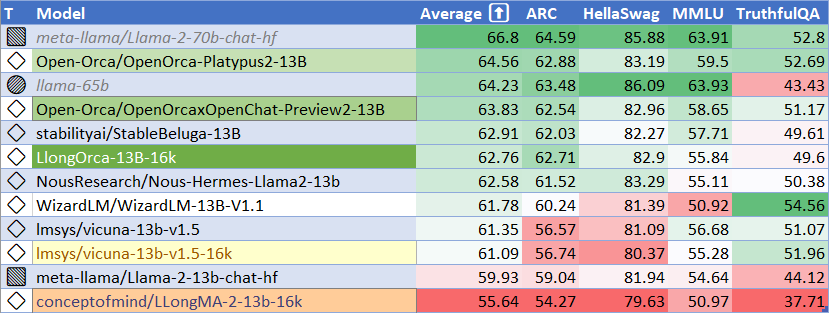
HF Leaderboard evals place this model as #1 for all 13B long context models at release time.
We achieve >112% the performance of the base LLongMA2-13b-16k model we tuned on top of.
As well, we preserve >98% of the performance of the OpenOrcaxOpenChat-Preview2-13B model we share datasets with, while extending the context to 16k.
We did this training as part of testing setup of our H100 cluster.
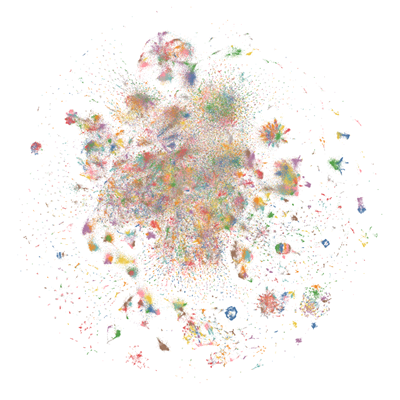
Want to visualize our full (pre-filtering) dataset? Check out our Nomic Atlas Map.
<|im_start|>system
You are LlongOrca, a large language model trained by Alignment Lab AI. Write out your reasoning step-by-step to be sure you get the right answers!
<|im_end|>
<|im_start|>user
How are you<|im_end|>
<|im_start|>assistant
I am doing well!<|im_end|>
<|im_start|>user
How are you now?<|im_end|>
Evaluation
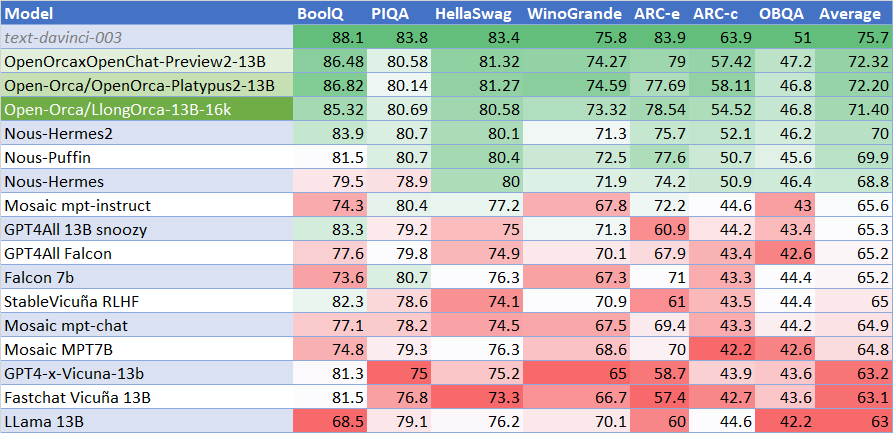
We have evaluated using the methodology and tools for the HuggingFace Leaderboard, and find that we have significantly improved upon the base long context model.
We reach >112% of LLongMA2-13B-16k performance.
We preserve >98% of OpenOrcaxOpenChat-Preview2-13B performance and are #1 on the leaderboard for long context 13B models at release time.
We have >103% performance of the next 16k model (vicuna-13b-v1.5-16k).
As well, we expect the context extension techniques from LLongMA to be more robust than other 16k context models available.
We find we score higher than all non-OpenOrca models on the GPT4ALL leaderboard, while preserving ~98.7% of our OpenOrcaxOpenChat-Preview2-13B performance.
We used a curated, filtered selection of most of the GPT-4 augmented data from our OpenOrca dataset, which aims to reproduce the Orca Research Paper dataset.
Further details of our curation practices will be forthcoming with our full model releases.
We trained with 8x H100 GPUs for 10 hours, completing 4 epochs of full fine tuning on our dataset in one training run.
Commodity cost was ~$300.
Citation
bibtex
1@software{dale2023llongorca13b,
2  title = {LlongOrca13B: Llama2-13B Model Instruct-tuned for Long Context on Filtered OpenOrcaV1 GPT-4 Dataset},
3  author = {Alpin Dale and Wing Lian and Bleys Goodson and Guan Wang and Eugene Pentland and Austin Cook and Chanvichet Vong and "Teknium"},
4  year = {2023},
5  publisher = {HuggingFace},
6  journal = {HuggingFace repository},
7  howpublished = {\url{https://https://huggingface.co/Open-Orca/LlongOrca-7B-16k},
8}
9@software{openchat,
10  title = {{OpenChat: Advancing Open-source Language Models with Imperfect Data}},
11  author = {Wang, Guan and Cheng, Sijie and Yu, Qiying and Liu, Changling},
12  doi = {10.5281/zenodo.8105775},
13  url = {https://github.com/imoneoi/openchat},
14  version = {pre-release},
15  year = {2023},
16  month = {7},
17}
18@misc{mukherjee2023orca,
19      title={Orca: Progressive Learning from Complex Explanation Traces of GPT-4},
20      author={Subhabrata Mukherjee and Arindam Mitra and Ganesh Jawahar and Sahaj Agarwal and Hamid Palangi and Ahmed Awadallah},
21      year={2023},
22      eprint={2306.02707},
23      archivePrefix={arXiv},
24      primaryClass={cs.CL}
25}
26@misc{longpre2023flan,
27      title={The Flan Collection: Designing Data and Methods for Effective Instruction Tuning},
28      author={Shayne Longpre and Le Hou and Tu Vu and Albert Webson and Hyung Won Chung and Yi Tay and Denny Zhou and Quoc V. Le and Barret Zoph and Jason Wei and Adam Roberts},
29      year={2023},
30      eprint={2301.13688},
31      archivePrefix={arXiv},
32      primaryClass={cs.AI}
33}
34@misc{touvron2023llama,
35    title={Llama 2: Open Foundation and Fine-Tuned Chat Models},
36    author={Hugo Touvron and Louis Martin and Kevin Stone and Peter Albert and Amjad Almahairi and Yasmine Babaei and Nikolay Bashlykov and Soumya Batra and Prajjwal Bhargava and Shruti Bhosale and Dan Bikel and Lukas Blecher and Cristian Canton Ferrer and Moya Chen and Guillem Cucurull and David Esiobu and Jude Fernandes and Jeremy Fu and Wenyin Fu and Brian Fuller and Cynthia Gao and Vedanuj Goswami and Naman Goyal and Anthony Hartshorn and Saghar Hosseini and Rui Hou and Hakan Inan and Marcin Kardas and Viktor Kerkez and Madian Khabsa and Isabel Kloumann and Artem Korenev and Punit Singh Koura and Marie-Anne Lachaux and Thibaut Lavril and Jenya Lee and Diana Liskovich and Yinghai Lu and Yuning Mao and Xavier Martinet and Todor Mihaylov and Pushkar Mishra and Igor Molybog and Yixin Nie and Andrew Poulton and Jeremy Reizenstein and Rashi Rungta and Kalyan Saladi and Alan Schelten and Ruan Silva and Eric Michael Smith and Ranjan Subramanian and Xiaoqing Ellen Tan and Binh Tang and Ross Taylor and Adina Williams and Jian Xiang Kuan and Puxin Xu and Zheng Yan and Iliyan Zarov and Yuchen Zhang and Angela Fan and Melanie Kambadur and Sharan Narang and Aurelien Rodriguez and Robert Stojnic and Sergey Edunov and Thomas Scialom},
37    year={2023},
38    eprint={2307.09288},
39    archivePrefix={arXiv},
40}