用户须知:为了遵循 Meta 发布的 LLaMA 模型许可,本模型发布的是训练前后的权重增量,最终模型可方便地通过脚本获得(参考 Usage 中的步骤)。
The Ziya-LLaMA-13B-Pretrain-v1 is a large-scale pre-trained model based on LLaMA with 13 billion parameters. We optimizes LLaMAtokenizer on chinese, and incrementally train 110 billion tokens of data based on LLaMa-13B model, which significantly improved the understanding and generation ability on Chinese. Based on the Ziya-LLaMA-13B-Pretrain-v1, the Ziya-LLaMA-13B-v1 is furtherly trained with 2 stages: multi-task supervised fine-tuning (SFT), and human feedback learning (RM, PPO). The Ziya-LLaMA-13B-v1 has the ability to perform tasks such as translation, programming, text classification, information extraction, summarization, copywriting, common sense Q&A, and mathematical calculation.
README: To follow the License of LLaMA released by Meta, we only release the incremental weights after continual pretraining. The final model Ziya-LLaMA-13B-Pretrain-v1 could be easily got via the script (refer to Usage).
在增量训练过程中,我们使用了160张40GB的A100,采用2.6M tokens的训练集样本数量和FP 16的混合精度,吞吐量达到118 TFLOP per GPU per second。因此我们能够在8天的时间里在原生的LLaMA-13B模型基础上,增量训练110B tokens的数据。据我们所知,这也是至今为止LLaMA-13B上最大规模增量训练。
The original data contains both English and Chinese, with English data from openwebtext, Books, Wikipedia, and Code, and Chinese data from the cleaned Wudao dataset and self-built Chinese dataset. After deduplication, model scoring, data bucketing, rule filtering, sensitive topic filtering, and data evaluation, we finally obtained 125 billion tokens of data.
To address the issue of low efficiency in Chinese encoding and decoding caused by the tokenizer of LLaMa, we added 8,000 commonly used Chinese characters to the LLaMa SentencePiece vocabulary. Deduplicating with the original LLaMa vocabulary, we finally obtained a vocabulary of size 39,410. We achieved this by reusing the LlamaTokenizer in Transformers.
During the incremental training process, we used 160 A100s with a total of 40GB memory, using a training dataset with 2.6 million tokens and mixed precision of FP16. The throughput reached 118 TFLOP per GPU per second. As a result, we were able to incrementally train 110 billion tokens of data based on LLaMa-13B model in just 8 days.As far as we know, it is the largest increamental training on LLaMA-13B so far.
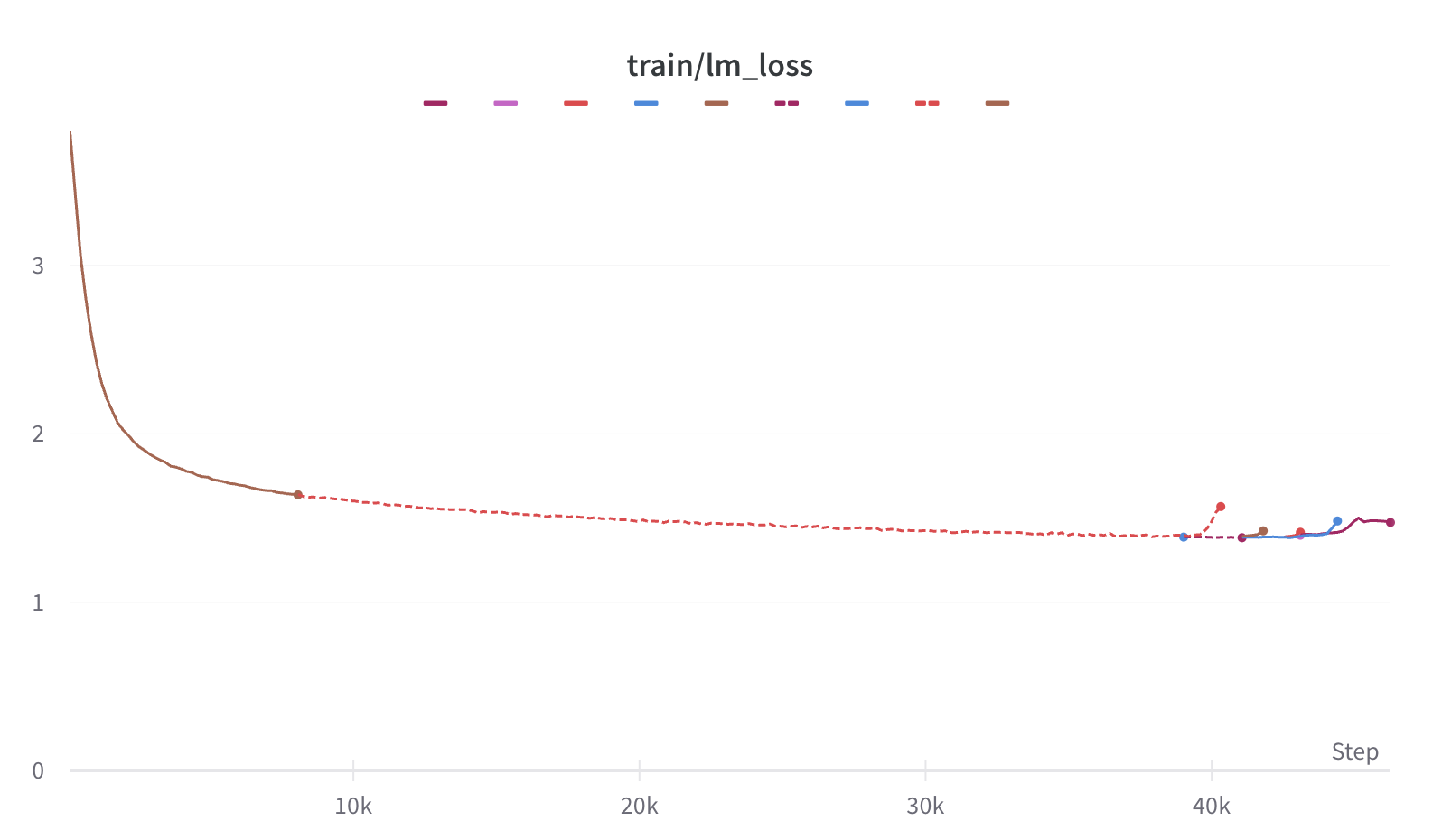
Throughout the training process, we encountered various issues such as machine crashes, underlying framework bugs, and loss spikes. However, we ensured the stability of the incremental training by making rapid adjustments. We have also released the loss curve during the training process to help everyone understand the potential issues that may arise.
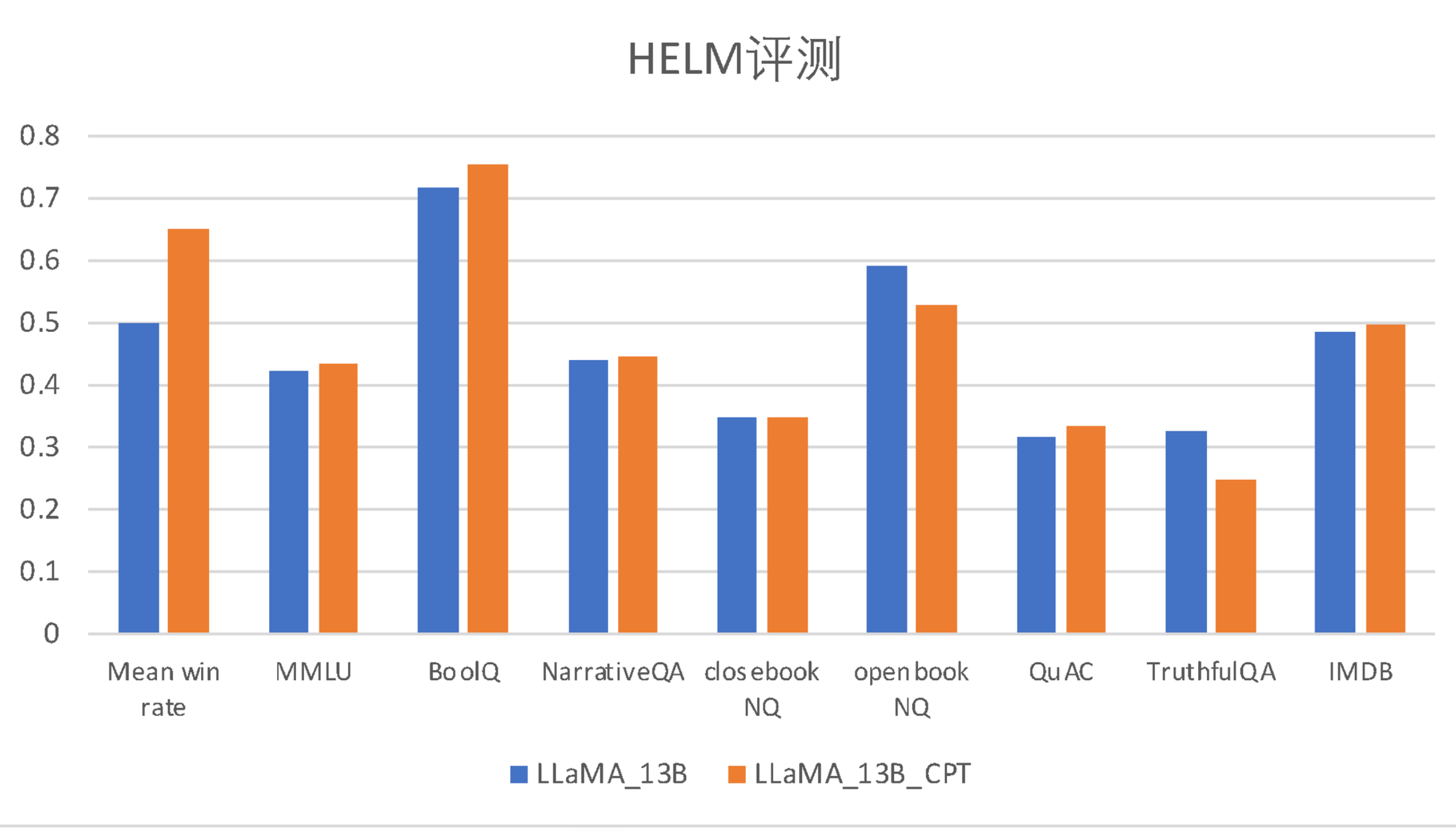
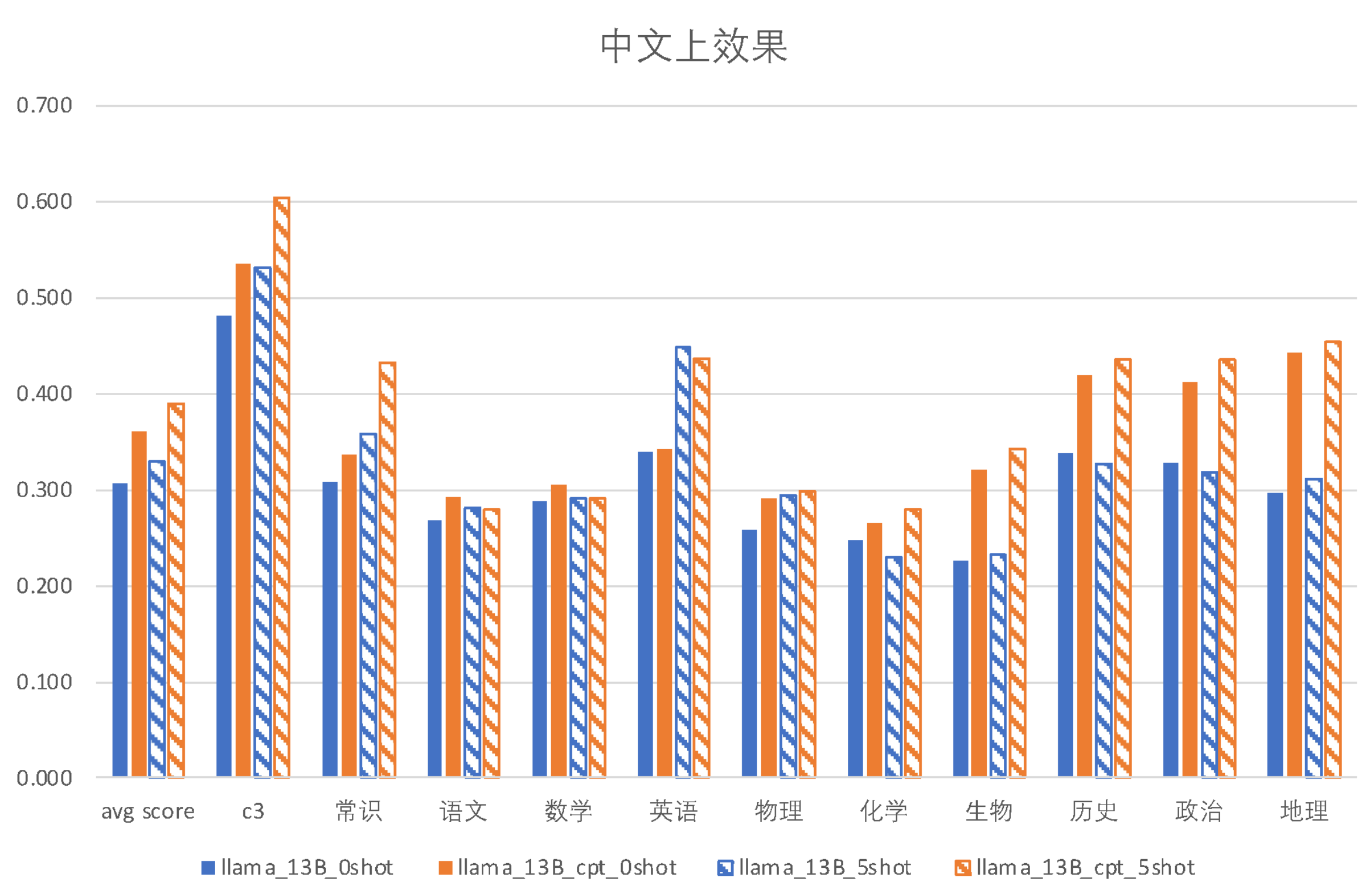
Here are comparisons of the Ziya-LLaMA-13B-Pretrain-v1 model and the LLaMA model before continual pre-training, evaluated on the English benchmark (HeLM), and our Chinese multiple-choice evaluation datasets.
Step 1: Obtain the LLaMA weights and convert them into the Hugging Face Transformers format. You can refer to the script (skip this step if you already have the Hugging Face weights).
If you are using the resource for your work, please cite the our paper:
text
1@article{fengshenbang,
2  author    = {Jiaxing Zhang and Ruyi Gan and Junjie Wang and Yuxiang Zhang and Lin Zhang and Ping Yang and Xinyu Gao and Ziwei Wu and Xiaoqun Dong and Junqing He and Jianheng Zhuo and Qi Yang and Yongfeng Huang and Xiayu Li and Yanghan Wu and Junyu Lu and Xinyu Zhu and Weifeng Chen and Ting Han and Kunhao Pan and Rui Wang and Hao Wang and Xiaojun Wu and Zhongshen Zeng and Chongpei Chen},
3  title     = {Fengshenbang 1.0: Being the Foundation of Chinese Cognitive Intelligence},
4  journal   = {CoRR},
5  volume    = {abs/2209.02970},
6  year      = {2022}
7}